
What I Look for on a Northwest Roof
I'm reading a roof before I ever climb a ladder. Here are the spots I check first, and what each one tells me.
Justin Shirley · CEO, State Roofing & Exteriors · President, RCAW
6 min read
Published
The short version
- ✓The north side and the shaded spots show a roof's real condition first.
- ✓Flashing, pipe boots and valleys tell me how well the roof was built.
- ✓The gutters tell me how the roof sheds water and how fast it's wearing.
- ✓The attic tells me whether the roof is failing from the inside.
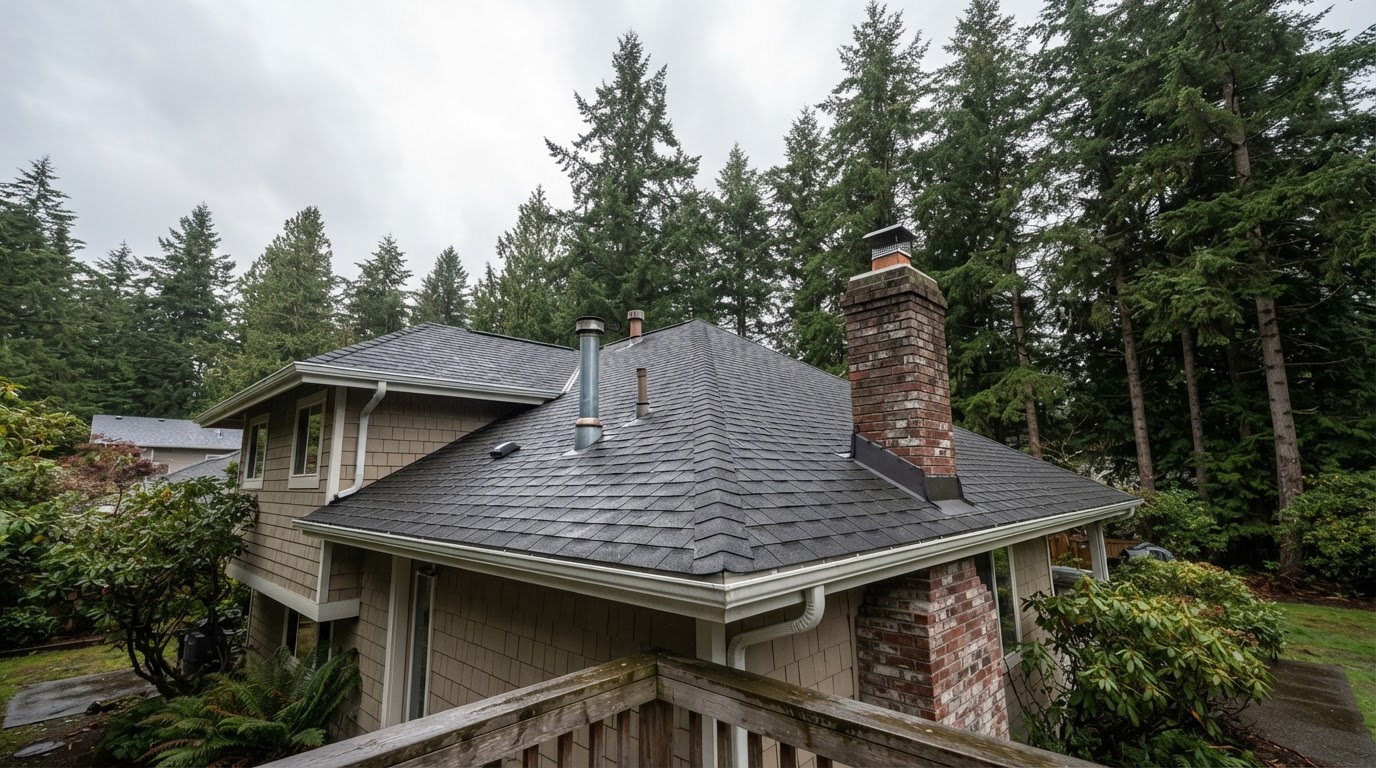
When I walk up to a house, I'm not looking at the whole roof at once. I'm looking at a handful of spots that tell me almost everything. Most of them you can check yourself from the ground.
1. The north side first
The south side of a roof gets the sun. The north side and anything under trees stays wet the longest, so that's where wear shows up first: moss, curling, shingles losing their granules. If the north side looks good, the rest usually does too.
2. The gutters
I look in the gutters before I look at the shingles. A layer of granules that looks like coarse sand means the shingles are wearing. Overflow stains on the fascia or siding tell me water isn't getting off the roof the way it should.
3. Everything that sticks through the roof
Pipe boots, vents, chimneys and skylights are where roofs leak. I check whether the rubber on the pipe boots is cracked, whether the flashing is metal that was installed properly or a smear of sealant, and whether the chimney has its flashing and counterflashing intact.
4. Where the roof meets a wall, and the valleys
Wherever a roof runs into a wall, there should be flashing woven in with the shingles, and a kickout at the bottom to send water into the gutter. Valleys carry the most water on the roof, so worn shingles or debris there are a red flag.
5. The ridge and the edges
Cracked ridge caps and lifted shingles along the edges are where wind gets its grip. I also look for drip edge along the eaves; without it, water can wick back into the fascia.
6. The deck underfoot
When I'm on the roof, I pay attention to how it feels. A soft or spongy spot means the plywood underneath is wet or rotting, and that changes the whole conversation. This is one check to leave to a professional.
7. The attic
The attic is the roof's inside story. I look for daylight, water stains on the decking, damp insulation, and frost or rust on the nail tips. Those last two point to a ventilation problem, which can rot a roof from below even when the shingles look fine.
What it adds up to
One bad pipe boot is a repair. A pattern, like wear on the north side, granules in the gutters and soft spots underfoot, means the roof is near the end. That's the difference I'm looking for. The Repair or Replace guide walks through how to make that call.
Justin's rule of thumb
A roof tells you how it was built in about five places. If those five are done right, the rest usually is too.
Getting a roofer out?
The free Roof Estimate Checklist helps you know what to ask.
Common questions
Where should you look first when checking a Northwest roof?
The north side and shaded spots, because they stay wet the longest and show wear first. Then the gutters, everything that sticks through the roof, walls and valleys, the ridge and edges, and the attic.
What do shingle granules in the gutters mean?
A layer of granules that looks like coarse sand means the shingles are wearing.
How can you tell a roof is near the end of its life?
One bad pipe boot is a repair. A pattern, like wear on the north side, granules in the gutters and soft spots underfoot, means the roof is near the end.

Justin Shirley
Justin Shirley is CEO of State Roofing & Exteriors and President of the Roofing Contractors Association of Washington (RCAW).
More about Justin