
Repair or Replace? How to Make the Call With Confidence
Age, shingles, decking, leaks and layers: the five things I check before telling anyone their roof has more life in it, or doesn't.
Justin Shirley · CEO, State Roofing & Exteriors · President, RCAW
7 min read
Published
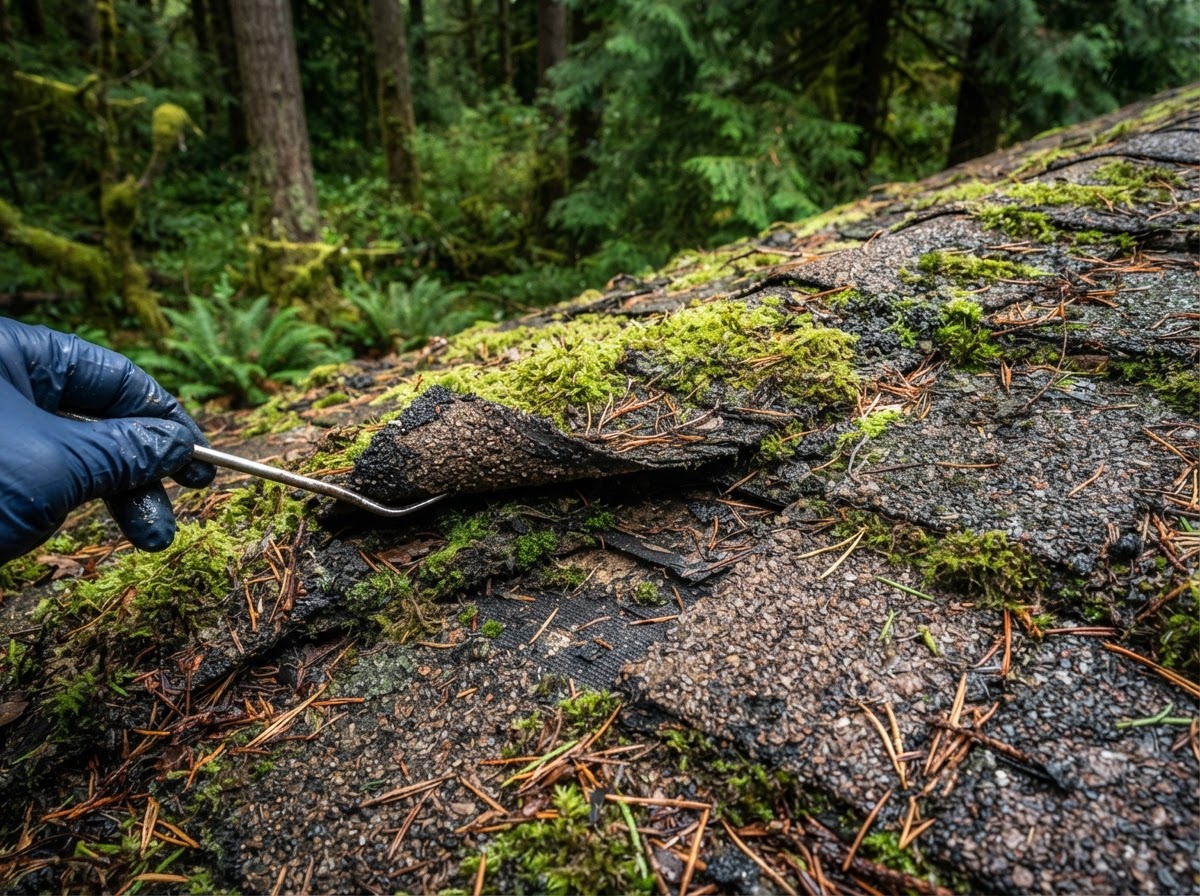
A 22-year-old architectural shingle roof with granule loss and curled edges — a classic replacement candidate.
The short version
- ✓In the Northwest, architectural shingles realistically last 18–25 years, not the 30–50 on the package.
- ✓Under 15 years with isolated problems: repair. Past 20 with widespread wear: plan to replace.
- ✓Soft decking across the roof, two existing layers, or repeat leaks in the same spot all point to replacement.
- ✓A repair at 15–20% of replacement cost that buys 3–5 years is reasonable. At 40% or more, it's usually poor value.
"Can we get a few more years out of it?" is the question I hear most. The honest answer depends on five things, and you can check most of them before anyone climbs a ladder.
1. Start with the age of the system
The package says 30 to 50 years. Northwest rain, moss and shade say otherwise: most architectural shingles here give you 18 to 25.
Know when your roof went on, because it frames every other decision. A 12-year-old roof with one bad spot is a repair. A 22-year-old roof with problems everywhere is a replacement waiting to happen.
2. Read the shingles from the ground and the ridge
From the yard you can spot curling, cupping and bald patches. Up close, shingles that crack instead of flexing are near the end. Signs it's time to replace:
- ✓Heavy granule loss showing up in the gutters
- ✓Curling across more than a quarter of the roof
- ✓Several patches already, from earlier repairs
- ✓Soft spots underfoot, or more than two layers
3. The deck tells the real story
Shingles are the skin. The plywood or plank deck underneath is the bones.
A bit of localized rot can be cut out and replaced during a repair. Rot scattered across the roof means a full tear-off and new sheathing, no matter how the shingles look.
Justin's rule of thumb
If 20–25% or more of a roof plane needs patching, you're paying repair prices for a worse result than a clean replacement.
4. Leaks aren't always a death sentence
A failed pipe boot, a bad bit of flashing or a few wind-lifted shingles are everyday repairs.
The warning sign is a leak that keeps coming back in the same spot, or water showing up in more than one room. That usually means the underlayment itself is done.
5. Layer count and code
Most Northwest jurisdictions allow one overlay on top of a single flat, solid layer. I rarely recommend it: nobody can see the deck, and you add weight.
If there are already two layers, code takes the decision away. It's a full tear-off.
Weigh repair cost against remaining life
Put the repair quote next to a replacement quote and ask how many years the repair really buys.
| Repair cost vs. replacement | What it should buy | Verdict |
|---|---|---|
| 15–20% | 3–5 more years | Reasonable repair |
| 20–40% | Depends on age and deck | Get two on-roof assessments |
| 40% or more | Rarely enough | Usually poor value; replace |
Whichever way you lean, get two thorough assessments from people who actually walk the roof, not a drive-by bid.
Getting estimates?
Hold every bid up to the free Roof Estimate Checklist before you sign.
Common questions
How long does an asphalt shingle roof last in the Pacific Northwest?
Most architectural shingles here realistically last 18 to 25 years, not the 30 to 50 on the package, because rain, moss and shade wear them down faster.
When is it worth repairing a roof instead of replacing it?
A repair usually makes sense on a roof under about 15 years old with isolated problems. A repair that costs 15 to 20 percent of a replacement and buys 3 to 5 more years is reasonable; at 40 percent or more, it's usually poor value.
Can you put a new roof over an old one?
Most Northwest jurisdictions allow one overlay over a single flat, solid layer, but it's rarely a good idea because nobody can inspect the deck. If there are already two layers, code requires a full tear-off.
Justin Shirley
Justin Shirley is CEO of State Roofing & Exteriors and President of the Roofing Contractors Association of Washington (RCAW).
More about Justin