Why Attic Ventilation Matters in the Northwest
In our climate, one of the biggest threats to a roof comes from underneath. Here's how attic ventilation works and how to tell if yours is falling short.
Justin Shirley · CEO, State Roofing & Exteriors · President, RCAW
6 min read
Published
The short version
- ✓A vented attic needs balanced airflow: cooler air in low at the soffits, warm, moist air out high at or near the ridge.
- ✓In the Northwest, poor ventilation mostly shows up as moisture: condensation, frost on nails, mildew and rotting decking.
- ✓Insulation blocking the soffit vents is one of the most common problems.
- ✓More vents isn't always better. Mixing different exhaust vents can short-circuit the airflow.
Most people think of a roof as protection from the weather outside. But in a Northwest winter, a lot of the damage starts inside the house, as warm, damp air finds its way into a cold attic.
How ventilation works
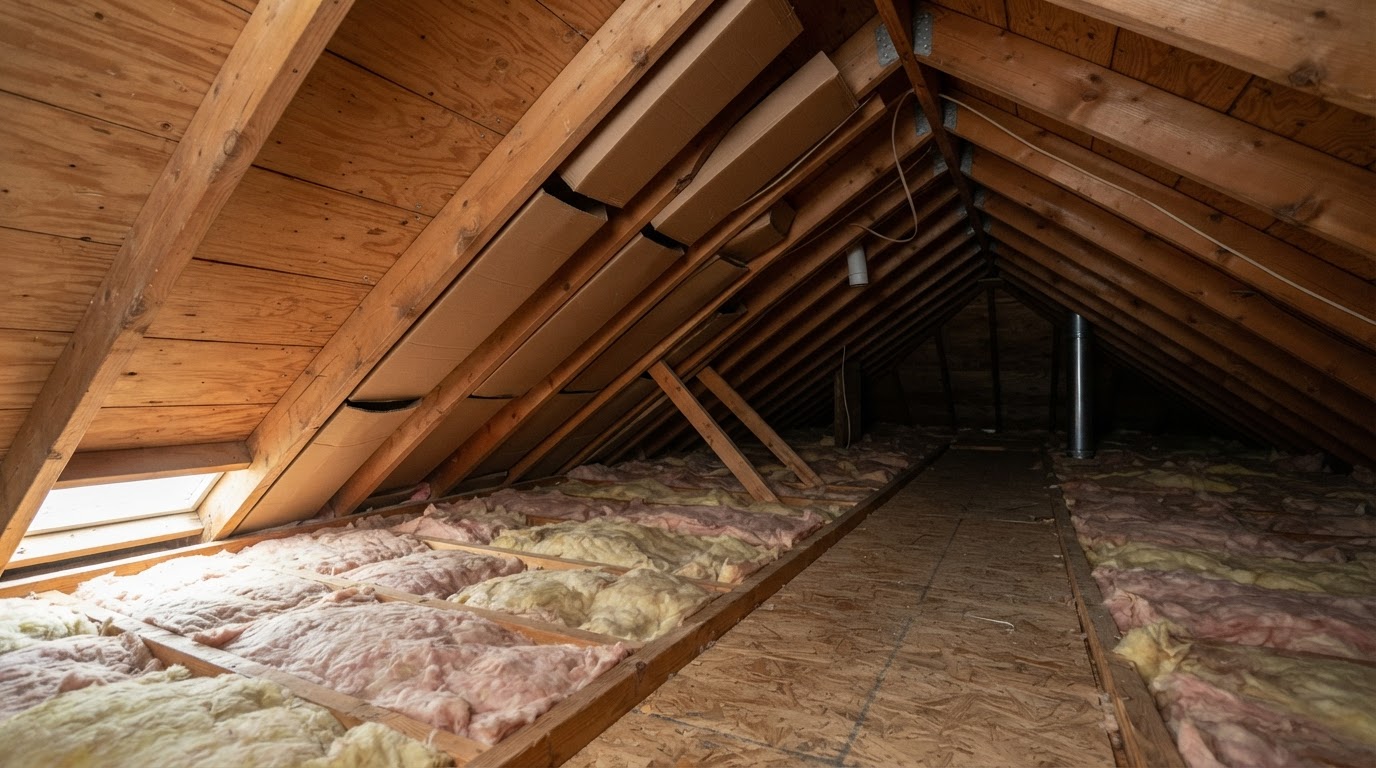
A vented attic breathes in a loop. Outside air comes in low, through vents in the soffits under the eaves. As it warms, it rises and leaves high, through a ridge vent or other exhaust vents near the top of the roof.
The key is balance. You need enough intake and enough exhaust, working as one system. Building codes and shingle manufacturers set minimum amounts of vent area based on the size of the attic.
Why it matters more here
Every household puts moisture into the air: showers, cooking, laundry, even breathing. Some of that warm, damp air leaks up into the attic.
In a long, cool, wet season, the underside of the roof deck stays cold. When moist air hits it, it condenses, the same way a cold glass sweats. Over time, that means mildew, rusted nails, and plywood that softens and rots from below. Many shingle warranties also require proper ventilation.
Signs your attic isn't keeping up
- ✓Frost or water droplets on nail tips or the underside of the deck on cold mornings
- ✓Dark staining or mildew on the decking or rafters
- ✓Damp, matted or compressed insulation
- ✓A musty smell in the attic or upstairs
- ✓An attic that feels like an oven on summer afternoons
- ✓At higher elevations, ice building up along the eaves
Common culprits
- 1Blocked soffit vents. Insulation pushed against the eaves can choke off the intake. Foam or cardboard baffles keep a channel open.
- 2Bathroom and kitchen fans venting into the attic. They should run all the way outside, not stop in the attic.
- 3Mixed exhaust vents. A ridge vent combined with gable vents or a powered fan can pull air in through the wrong openings and skip most of the attic.
- 4Not enough intake. Plenty of exhaust with too little intake can't move much air.
- 5Air leaks from the house. Gaps around recessed lights, the attic hatch and plumbing let more moist air in to begin with.
Fixing it
The fix usually combines a few things: balancing intake and exhaust, clearing the soffits, routing fans outside, and sealing air leaks from the house below.
The best time to get ventilation right is during a roof replacement, when the vents are easy to change. When you compare estimates, check that each bid says what it will do about ventilation, not just that it will replace the vents already there.
Justin's rule of thumb
Look in your attic on a cold winter morning. Frost on the nails tells you more than any brochure.
Getting a new roof?
The free Roof Estimate Checklist includes the ventilation questions to ask.
Common questions
How does attic ventilation work?
Outside air comes in low through soffit vents under the eaves, warms, rises and leaves high through a ridge vent or other exhaust vents near the top of the roof. Intake and exhaust need to be balanced.
What are the signs of poor attic ventilation?
Frost or droplets on nail tips or the underside of the deck on cold mornings, dark staining or mildew on the decking, damp or matted insulation, a musty smell, and an attic that feels like an oven on summer afternoons.
Can a roof have too many vents?
More vents isn't always better. A ridge vent combined with gable vents or a powered fan can pull air in through the wrong openings and skip most of the attic.

Justin Shirley
Justin Shirley is CEO of State Roofing & Exteriors and President of the Roofing Contractors Association of Washington (RCAW).
More about Justin