Why Roofing Companies Look Different in the Northwest
Our weather changes how a roofing company has to run: the schedule, the safety plan, the materials, and what a crew looks for on every job.
Justin Shirley · CEO, State Roofing & Exteriors · President, RCAW
6 min read
Published
The short version
- ✓Wet roofs change the schedule and the safety plan. Good companies plan for both instead of hoping for dry days.
- ✓Rot, moss and ventilation problems are routine here, so every tear-off doubles as an inspection.
- ✓Flashing, underlayment and ventilation carry more weight in a climate where roofs rarely dry out.
- ✓The companies that do well here are built for consistency, not speed.
Talk to roofers from drier parts of the country and you'll hear about long runs of dry days and crews that can count on the weather. That's not our reality. Northwest weather shapes everything about how a good roofing company has to operate.
The weather sets the schedule
Much of the year, we work in windows. A crew has to be ready to move when the weather breaks, and every open roof has to be protected before the crew leaves, every single day.
That changes how you plan. Timelines need weather days built in. Customers need to hear early and honestly when a start date moves. The companies that communicate well about weather keep their customers. The ones that don't lose them.
Safety on wet, steep roofs
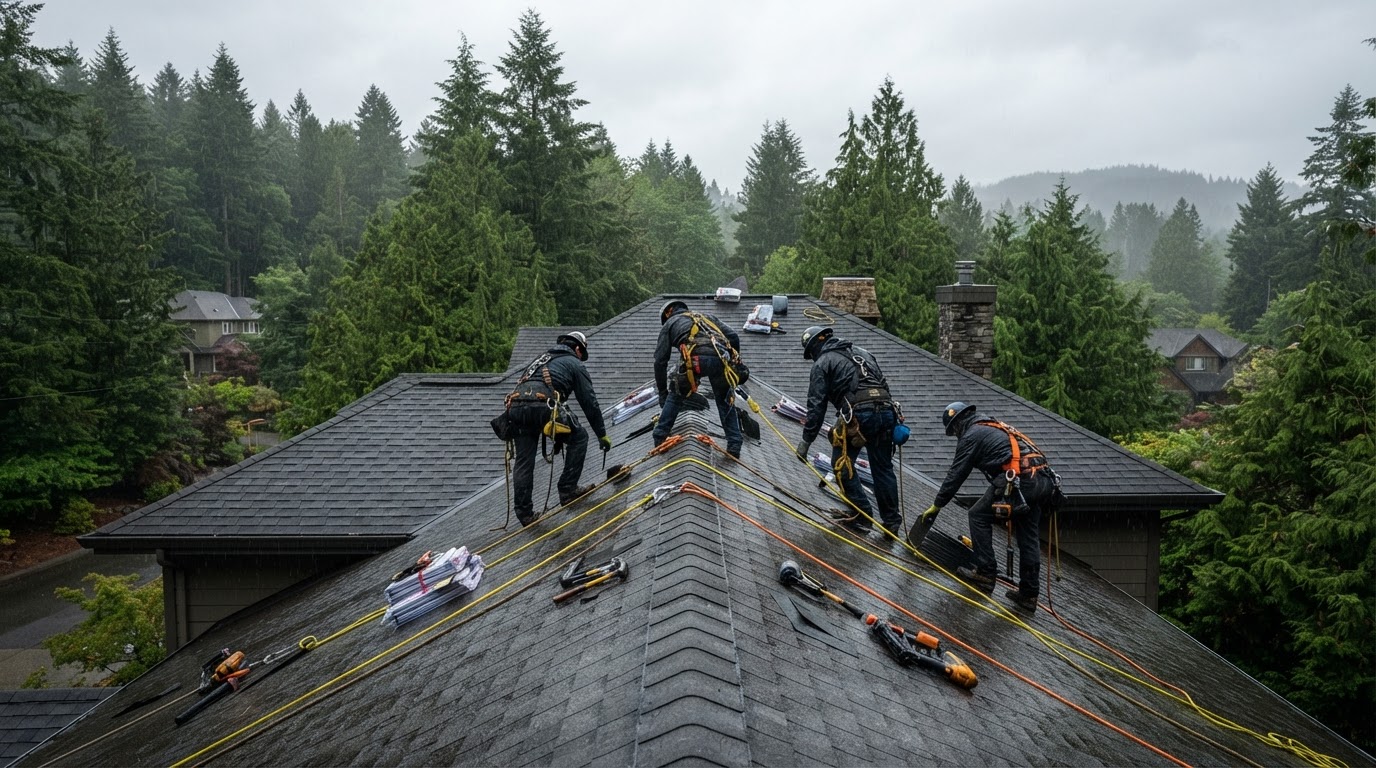
Morning dew, wet plywood and moss make a roof slick in ways a dry-climate crew rarely sees. Steep pitches are common here too.
Washington's fall protection rules are strict, and our roofs are the reason. The good companies treat safety as part of the job plan: anchors, harnesses and judgment calls about when it's too wet to work, not a box to check.
Every tear-off is an inspection
In a climate this wet, what's under the shingles matters as much as the shingles. Soft or rotted decking, ventilation problems and old leaks show up on tear-offs all the time.
That means estimating has to plan for it, with a clear per-sheet price for decking, and crews have to be trained to spot it, document it and tell the homeowner before it's covered back up.
The details carry more weight
A roof here may stay wet for weeks at a time. So the things that only matter in a storm elsewhere matter every day here:
- ✓Underlayment and ice-and-water membrane in valleys and around penetrations
- ✓Flashing at walls, chimneys and skylights, replaced rather than reused
- ✓Balanced attic ventilation, so moisture doesn't rot the deck from below
- ✓Materials and maintenance plans that account for moss
What it means for running a company
The companies that last in the Northwest aren't the ones that go fastest. They're the ones that do the same things right on every roof: honest estimates with real decking allowances, trained crews, clear communication about weather, and photos of the work before it's covered up.
That's the standard. It isn't flashy, but homeowners notice, and so do the people who want to work for you.
Justin's rule of thumb
In the Northwest, the part of the roof you can't see is the job. Get the deck, the flashing and the ventilation right, and the shingles take care of themselves.
Common questions
How does Northwest weather affect how a roofing company runs?
Much of the year, crews work in weather windows. Timelines need weather days built in, every open roof has to be protected before the crew leaves each day, and customers need to hear early when a start date moves.
Why should Northwest roofing estimates include a decking price?
In a climate this wet, soft or rotted decking, ventilation problems and old leaks show up on tear-offs all the time, so estimates should include a clear per-sheet price for decking.
What makes a roofing company last in the Northwest?
Doing the same things right on every roof: honest estimates with real decking allowances, trained crews, clear communication about weather, and photos of the work before it's covered up.
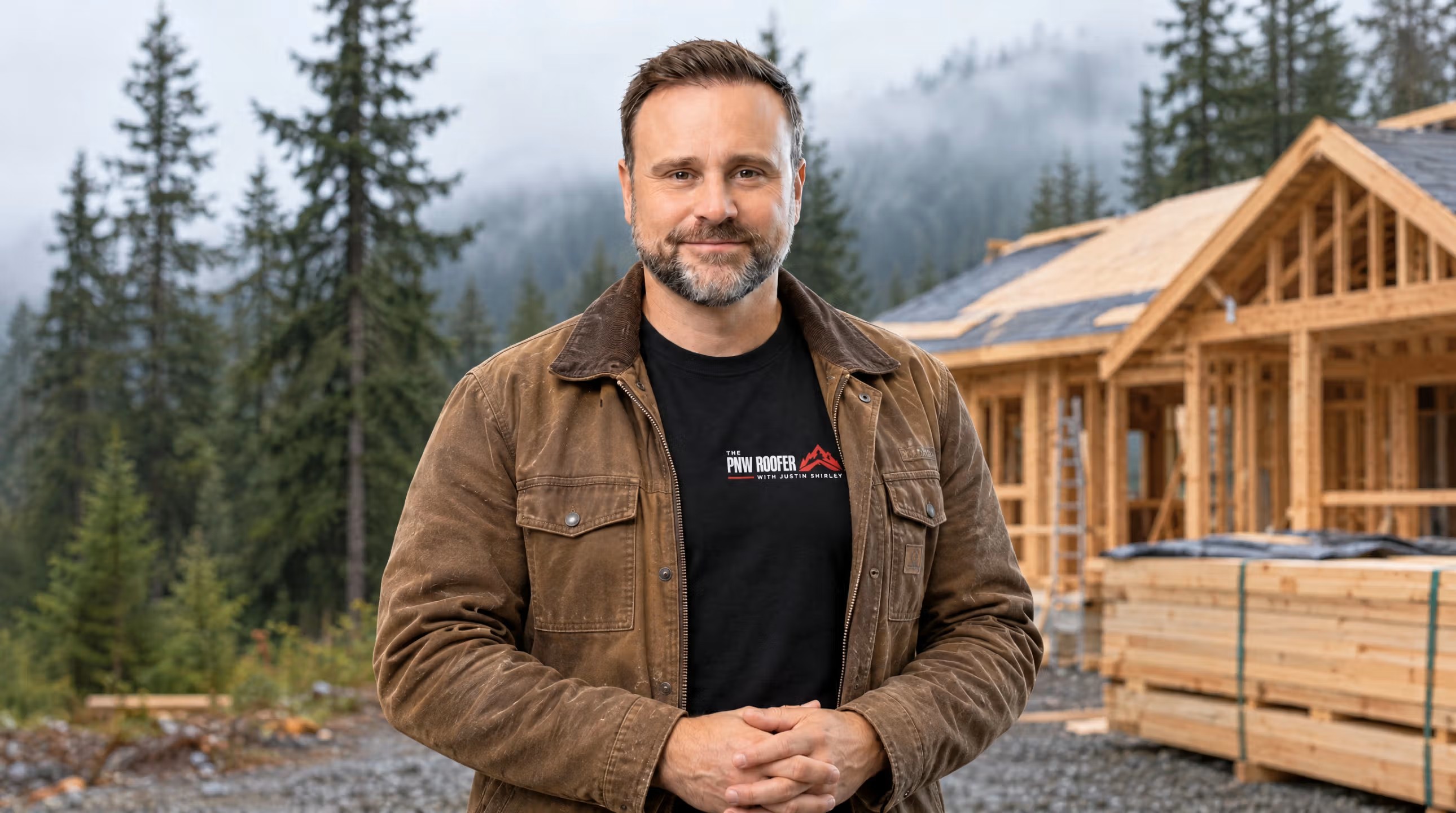
Justin Shirley
Justin Shirley is CEO of State Roofing & Exteriors and President of the Roofing Contractors Association of Washington (RCAW).
More about Justin